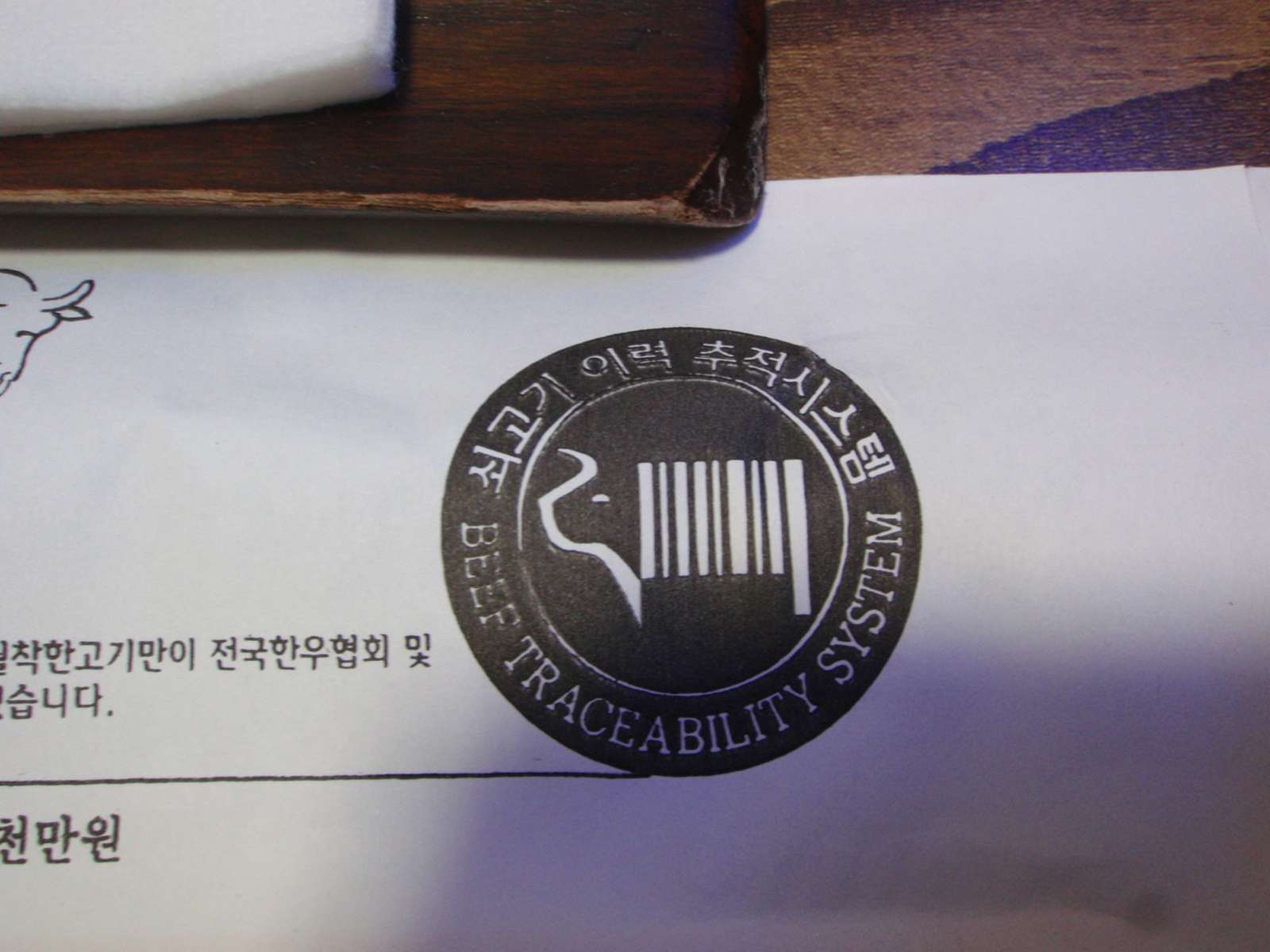
That night, we went to a Korean barbecue restaurant. Koreans demand to be informed about the quality and history of the meat they eat, and thus they want to be able to determine from what farm it was raised, etc. So there is a system in place that allows consumers to trace the meat they buy in a store to a particular farm or rancher or importer. For many years, U.S. meat was banned as it was seen as of inferior quality and questionable health standards. (Aside to Mom regarding refrigeration and food sickness. There is little refrigeration at outdoor food markets, and little need, since the meat or poultry is presumably brought from farm to market, slaughtered, sold and eaten all in the same day. Furthermore, the animal was probably raised outdoors eating food it was intended to eat, so it tends to be less likely to be harboring disease. In the U.S. weeks if not months could pass between a chicken being killed on a factory farm somewhere in Iowa, and showing up on your dinner plate in a restaurant in Tucson. Thus, in the U.S., strict sanitation standards, radiation treatments, refrigeration requirements are an advanced science that is necessary to keep the food non-toxic long enough to reach a dinner plate. Now, U.S. beef is gaining some market acceptance in Korea, mostly for one reason: it´s cheap. There´s even Costco in Korea now.