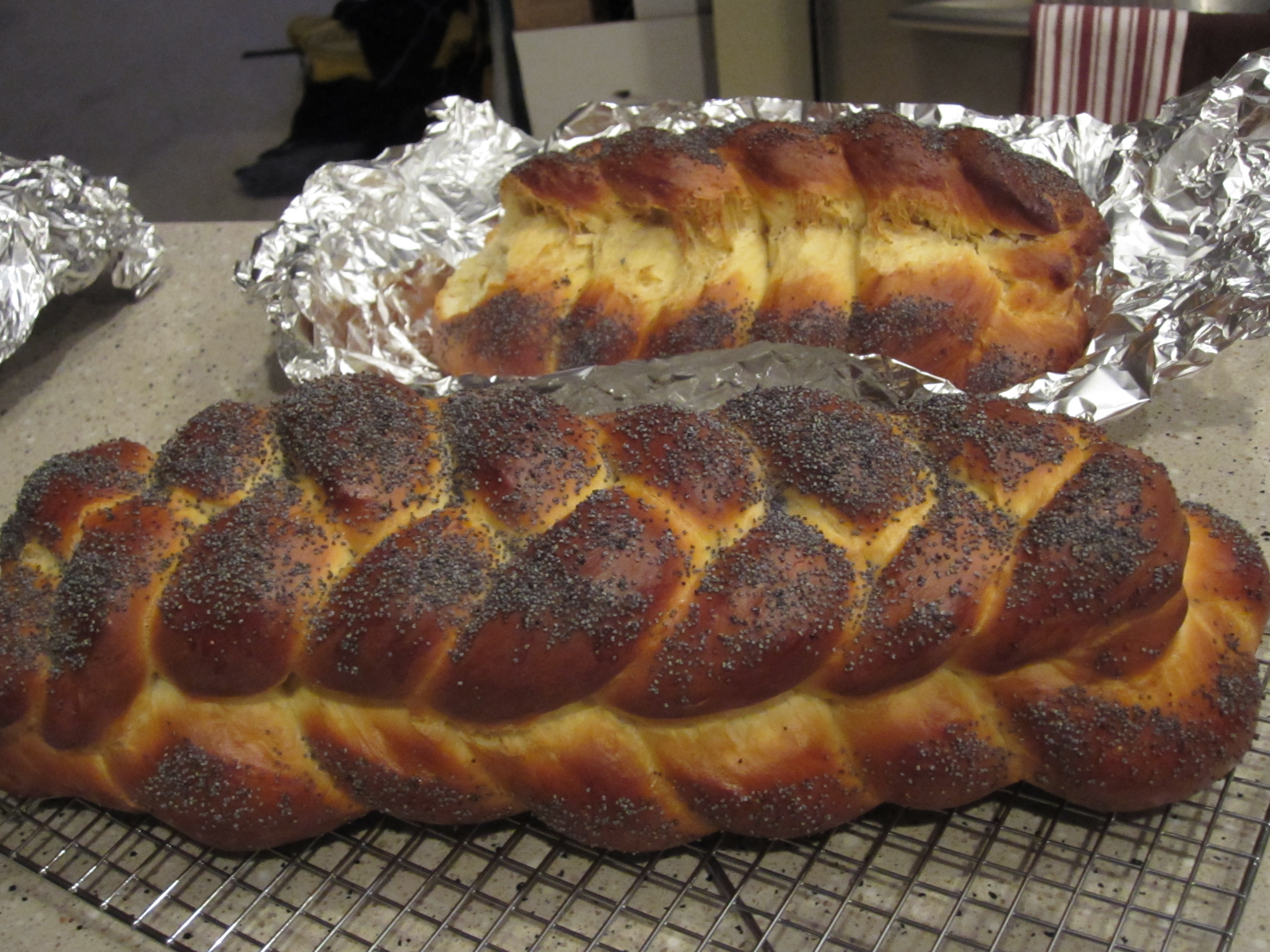
The loaf in the back was made first. While making the second, I decided I had probably used the right measurements. However, in baking at 8am, I followed the New Best Recipe recipe exactly, and did not proof the yeast (they have the ingredients split into dry and wet, period). The second loaf, I did. The difference in behavior was significant.
Comments
I swear you should send this to the NBR site and suggest they post a correction. The second loaf looks fabulous.
— Margaret Hovell
Depends. Did you use instant or active dry yeast? The instant really doesn't need to be proofed, and in fact really neither does active dry. Ironically, the longer you have to wait for your bread to rise, the more flavor it develops, so I'm not surprised if you got better results not proofing the yeast, but it would take longer. Proofing commercial yeast is a little silly since it is basically never, ever bad or dead. Still, proofing is a good way to convert the yeast to liquid form which makes it easier to mix, especially when using the larger pellets in active dry yeast.
— John Hovell
I believe it was active dry. The biggest thing I noticed was that with the unproofed loaf, the dough had grains of yeast all over it, that looked like they'd never hydrated. I thought the bigger one tasted better, too, though any difference in taste could have been in my head.
— Catherine Hovell
Sounds like active dry. So the unproofed loaf was the one with triple salt? No wonder it didn't taste good.
— John Hovell
Well, in the end, I'm not positive that I actually DID use the tablespoon not the teaspoon. I think it's about a 40% chance I did.
— Catherine Hovell
Cooks Illustrated recipes usually calls for instant yeast not active dry (which should be dissolved with water before being added to a dough). Instant yeast doesn't need to be dissolved (which is one of the reeasons why CI likes it) so that might explain the yeast granules.
— Monica Lee
Yeah, exactly. I should have been more clear... though in some cases I think you can get away without proofing active dry if there is enough liquid to dissolve the pellets. But why not proof the yeast, it's fun, takes 5 minutes, and in my experience especially if you use warm water, it makes the rising stage go quicker.
— John Hovell