Do you use the ropes to "pull" yourself along, or to keep from falling? Is the climber attached to the robe in any way?
— Margaret Hovell
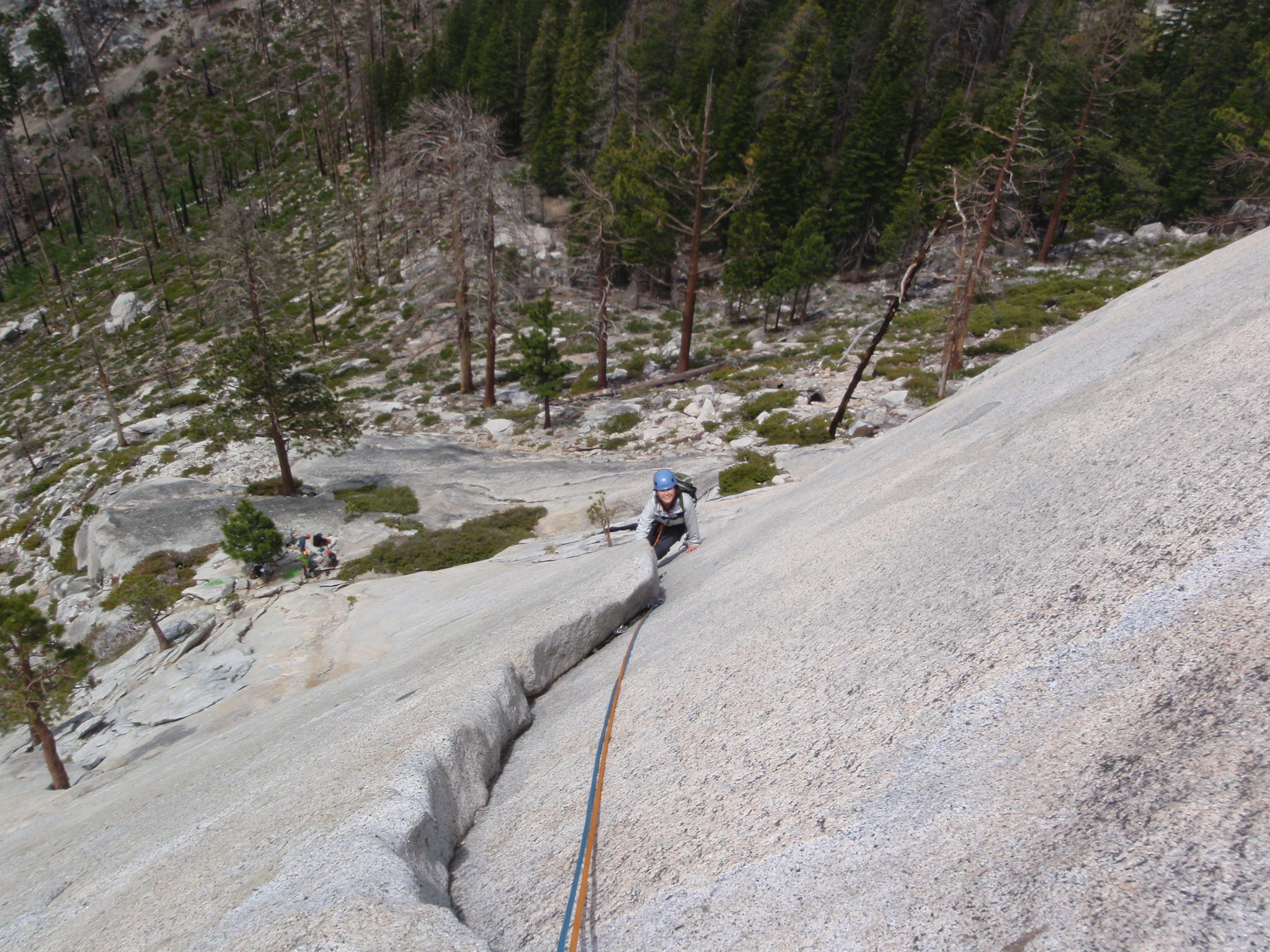
We don't ever (purposely) pull on the ropes. (Not that it would do any good for the leader as the rope trails behind them). Using the ropes to make upward progress is called "aid climbing" as opposed to "free climbing" which is what we're doing: using hands and feet to ascend. We are each tied to one end of each rope, and the ropes act as a backup device - to catch us if we happen to fall. The person who is belaying (not climbing) has the job of making sure that the climber only has a minimal amount of slack in the rope at all times, so if she falls, she won't go very far before being stopped by the rope.
Comments
Do you use the ropes to "pull" yourself along, or to keep from falling? Is the climber attached to the robe in any way?
— Margaret Hovell
We don't ever (purposely) pull on the ropes. (Not that it would do any good for the leader as the rope trails behind them). Using the ropes to make upward progress is called "aid climbing" as opposed to "free climbing" which is what we're doing: using hands and feet to ascend. We are each tied to one end of each rope, and the ropes act as a backup device - to catch us if we happen to fall. The person who is belaying (not climbing) has the job of making sure that the climber only has a minimal amount of slack in the rope at all times, so if she falls, she won't go very far before being stopped by the rope.
— John Hovell